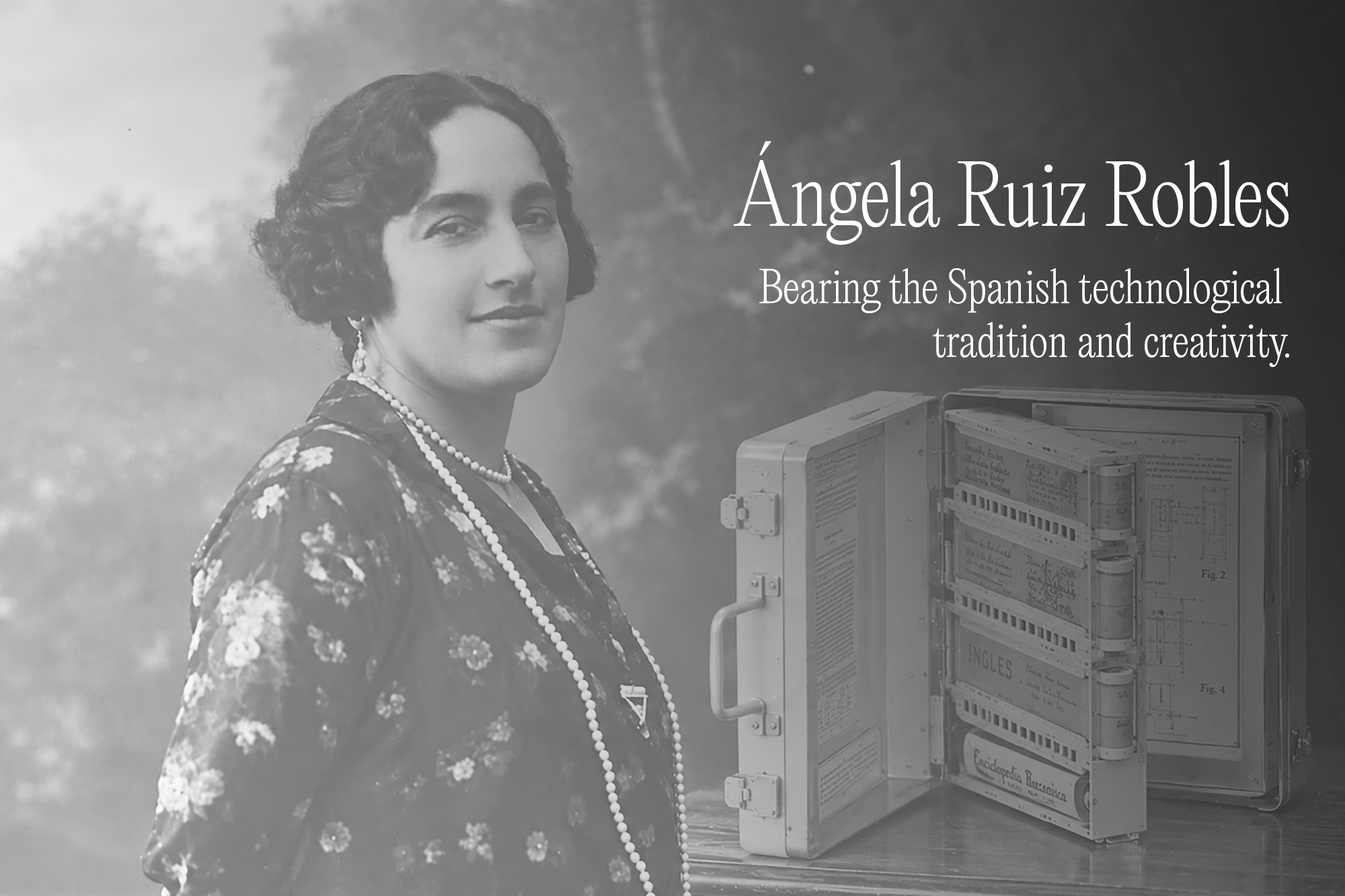
In 1949, Spanish teacher Ángela Ruiz Robles registered patent number 190,698 in Spain: a mechanical, electrical and air-pressure system for reading books. It is considered one of the precursors of the e-book.
Her idea did not come from imagining the future of reading. It came from something she saw every day in her classroom: the weight of the books her pupils had to carry to school. She wanted to bring the contents of several books together in a single device that could also be updated, illuminated for reading in the dark and magnified to make specific sections easier to read.
Her Mechanical Encyclopaedia, which she patented again in 1962, incorporated sound, graphics, built-in lighting and the ability to write on its surface. It was two decades ahead of the first digital book and more than half a century ahead of the e-readers we use today.
There is a less frequently told part of this story that we find particularly interesting. Ángela Ruiz Robles did not stop at obtaining a patent: the prototype was built at the Artillery Arsenal in Ferrol, and she personally oversaw its construction. She designed the device and made sure it became a reality. Today, it is preserved at the National Museum of Science and Technology in A Coruña.
We see a lot of our own approach in the way she worked.
Firstly, because lasting solutions often emerge from observing a problem where it actually occurs, rather than from an idea developed in a meeting room. A machine that closes reused cardboard boxes exists because someone looked around a warehouse and noticed perfectly good cardboard being thrown away.
And secondly, because there is a long way between patenting an idea and making it work. Someone has to bridge that gap. Designing and manufacturing under one roof is more than an organisational decision: it is what makes it possible to turn an idea into a finished machine that works as originally intended.
At Tecnimusa, we develop, design and manufacture eco-efficient automation solutions for intralogistics in the textile and fashion industry. Every project starts by taking a close look at a specific operation.
Shall we talk?
