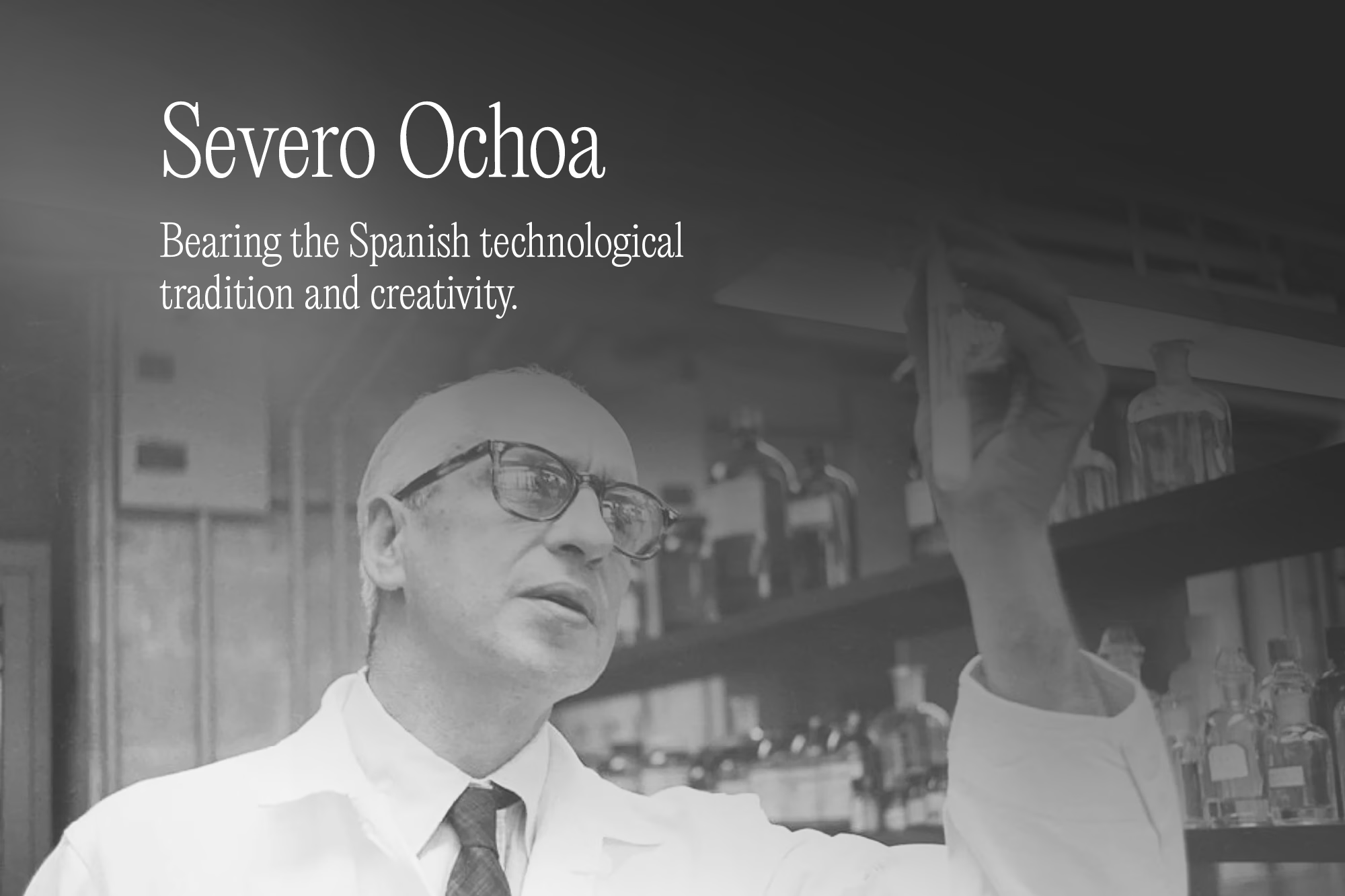
It was the 1950s, and science was beginning to unravel the mystery of life. In 1953, Watson and Crick had just discovered the famous DNA double helix, which contains genetic information encoded in a cryptic code.
But the key was missing: how did the organism read that chemical information and convert it into proteins and life? Two years later, Severo Ochoa paved the way to the answer.
He isolated the enzyme polynucleotide phosphorylase from a bacterium. With it, he achieved what seemed impossible: he managed to synthesize RNA chains in vitro. For the first time outside a cell!
This RNA polymerase is involved in the synthesis of messenger RNA, which carries instructions from DNA.
Thus, the Spanish biochemist paved the way for deciphering the genetic code and laid the foundations of modern molecular biology. Soon after, his protégé Arthur Kornberg demonstrated the importance of another polymerase enzyme in DNA synthesis. Together they were awarded the Nobel Prize in Medicine.
Nicknamed “the biochemist of biochemists”, Ochoa led laboratories in Berlin, London, Washington, New York, Madrid… He spearheaded the creation of the Center for Molecular Biology (CBM).
In his own words: “Rarely have I felt such intense emotion as when I believed I had made discoveries of some significance.”
A phrase that captures the excitement of a Spanish scientist who brought the world a little closer to the very essence of life itself.
