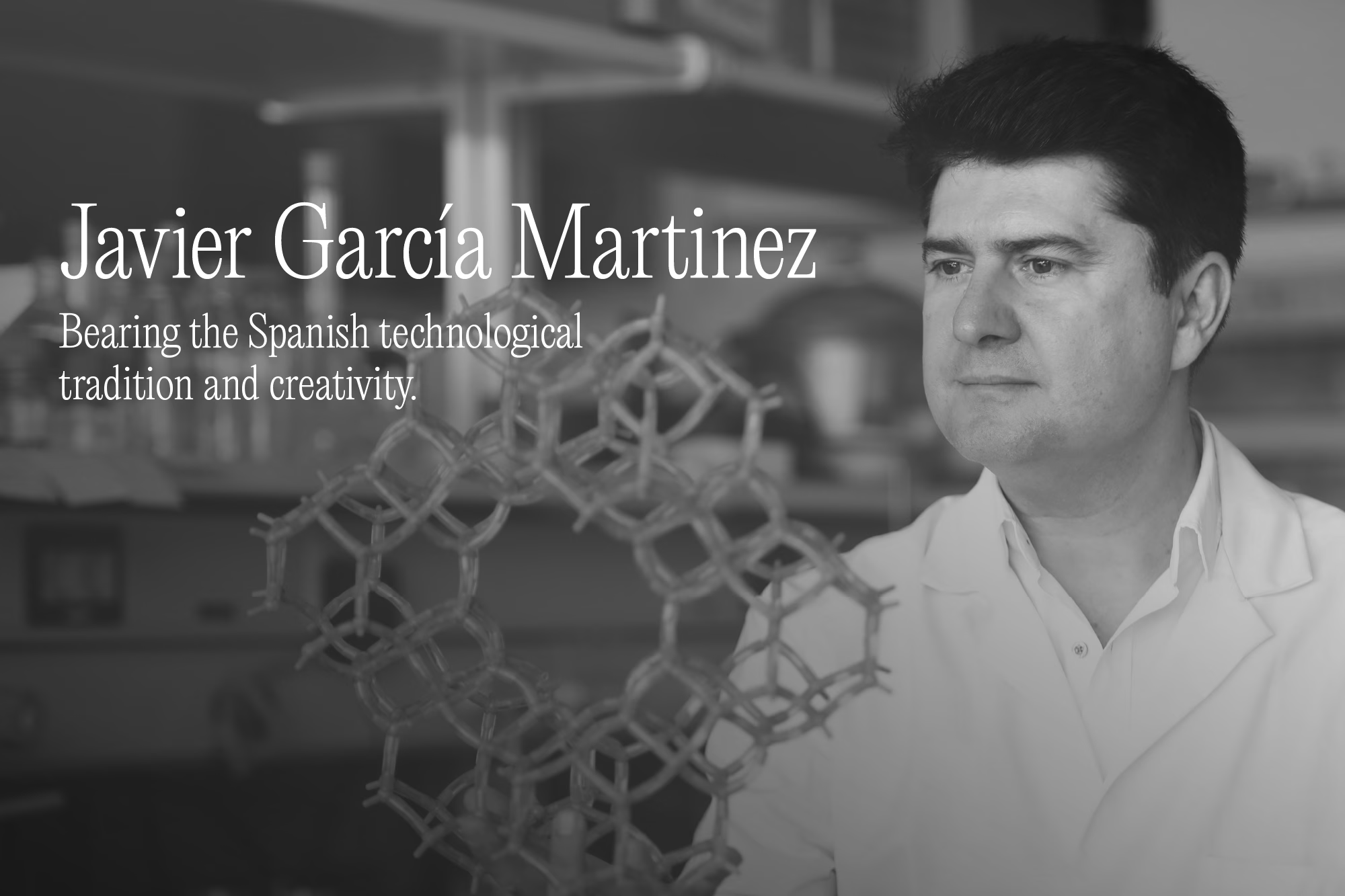
Is it possible for refineries to protect the planet while producing more? The energy industry is already moving in that direction. And one of the drivers of change is Javier García Martinez, a Spanish chemist who not only developed a molecular technology capable of reducing emissions, but also brought it to the table and to market. Today, it is used in refineries around the world.
Traditionally, oil refining has relied on zeolites, porous materials that act as catalysts to accelerate chemical reactions within a process. When hydrocarbons pass through the micropores of this material, they break down into various types of fuels. However, this is an inefficient process because large hydrocarbons are wasted.
The problem? The pores in zeolites are very small.
The solution? Nanostructured catalysts!
The innovation focused on rearranging the pore structure of zeolites at the nanoscale. García found a way to expand the micropores of zeolites to between 7 and 10 nanometers in diameter. This creates “molecular highways” that connect the smaller micropores.
In simple terms, it improved molecular traffic within the catalyst.
What does it mean?
For the oil industry, it means more efficient, economical, and sustainable production. More clean fuels with lower energy consumption. Fewer by-products generated. Lower CO2 emissions each year.
It also makes water and air treatment, chemical production, and the conversion of biomass into useful materials and energy more efficient.
We are talking about “Molecular Highway” technology. García Martínez developed it during his postdoctoral studies at MIT in the US. And in his role as an entrepreneur, he helped it transcend the walls of the laboratory, integrating it into the international market.
Back in Spain, his work continues. As a professor and director of the Molecular Nanotechnology Laboratory at the University of Alicante, he supports and promotes the scientific talent of new generations. He founded the Celera program, where each year 10 talented young people are supported with training, resources, and opportunities.
García Martínez himself reminds us that “There has never been a better time to be a scientist. Today we can do things that we could not even imagine before”.
Nanostructured catalysts are not just a technological innovation. They are proof that positive change in industry is possible, and that science can help us become more responsible and profitable at the same time.
At TECNIMUSA, we support forward-thinking development.
As an engineering company, we create eco-efficient automation solutions for industrial intralogistics.
Innovation, technology, and sustainability drive us forward.
