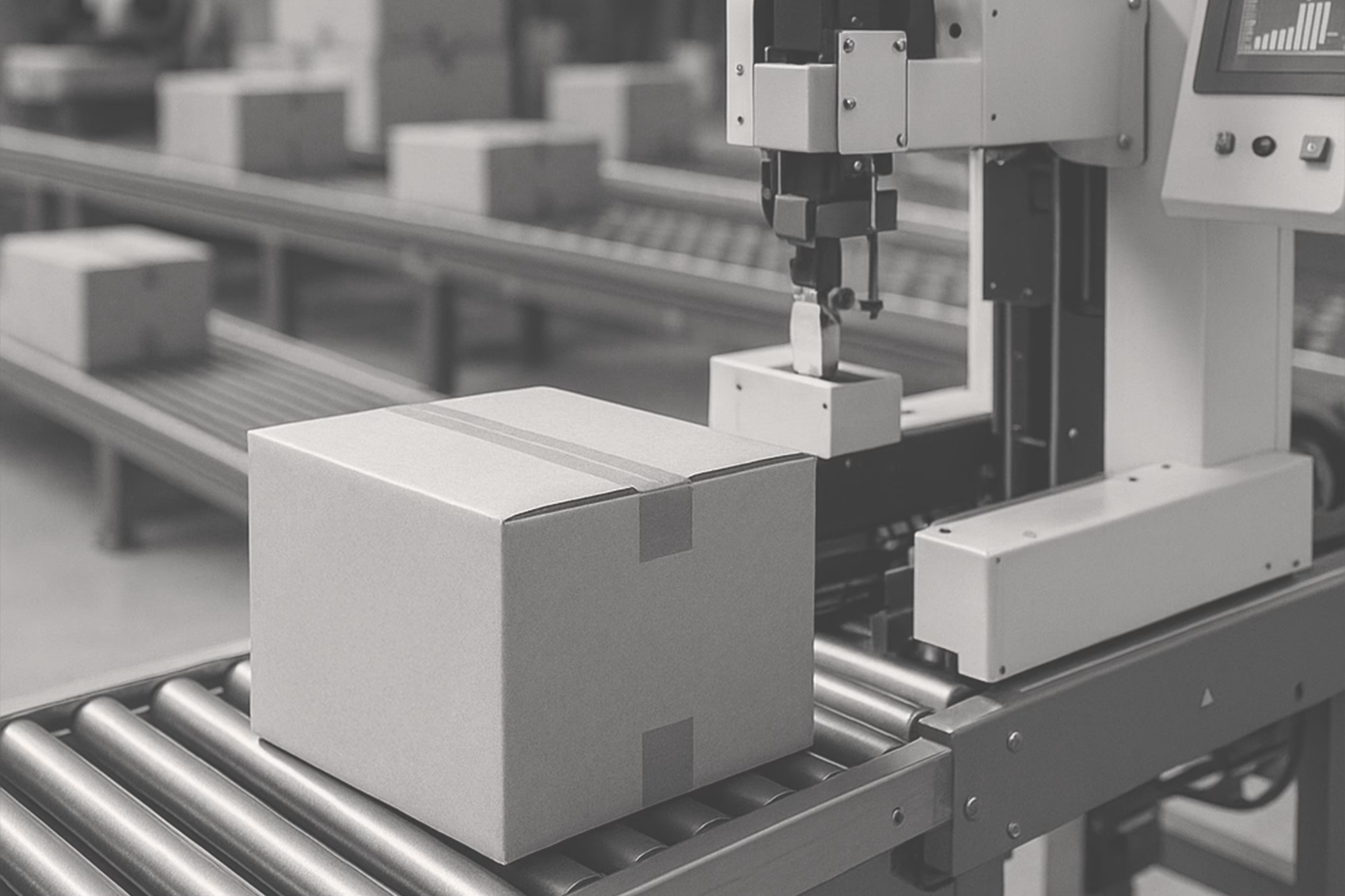
Packaging represents one of the most critical links in the supply chain. It not only influences operational efficiency, but also logistics costs and, above all, the environmental impact produced by the organization.
For this reason, in recent years the merger of automation and sustainability criteria has gained particular relevance. Both because of stringent regulations and consumer demands, companies are increasingly looking for solutions that speed up packaging operations while reducing resource consumption and minimizing waste.
In this post we explore how these eco-efficient packaging automation solutions are transforming the internal logistics of production plants, warehouses and distribution centers.
What is packaging automation?
Packaging automation refers to the implementation of a set of technologies and equipment that perform, mechanically or robotically, the tasks associated with the preparation of goods for shipping and distribution. This includes operations such as box formation, filling, insertion of filler material, sealing and sealing of packages, labeling and final palletizing.
This automation can be found both at the end of the production line of an industrial plant and in the packing areas within warehouses, or in distribution centers. In any case, the objectives are always:
- Replace repetitive manual tasks with electronically controlled processes, to increase speed and accuracy in packaging, to reduce the direct labor required and to improve the uniformity of the final product.
- Create an intelligent intralogistics network, with multiple technologies that enable tracking and tracing of every package packed and shipped. In addition, to provide real-time data that can be centralized in a warehouse management system.
- Consume as little energy as possible, with eco-efficient automation solutions that also require minimum maintenance. And avoid or minimize waste from packaging material.
Technologies and solutions for eco-efficient packaging automation
In practice, in packaging automation, PLC programmable controllers, robotic arms, conveyors, control viewers and machine vision systems, etc. are often implemented. In addition to the integration of multiple additional technologies for maximum control and tracking of the order, such as RFID or barcode labels and readers, weight and dimension sensors, etc.
However, beyond mechanizing the packaging process, the goal is to do it in a way that minimizes the use of materials and energy, reduces waste and, in general, boosts circularity. So the trend is to implement eco-efficient packaging automation solutions, which combine operational optimization with environmental criteria.What does that mean? Systems that are able to create packaging that is more tailored to the product, operate with recyclable or biodegradable materials and integrate recycling or reuse functions within the operation itself.
The important thing is that each machine or robot operates in a coordinated manner, under a control software that synchronizes the machines, records each operation and allows the connection of the packaging equipment with the WMS warehouse management system.
How automated packaging systems transform intralogistics: key benefits
Eco-efficient automated packaging systems bring about profound changes in intralogistics. The main benefits and transformations associated with these solutions are described below:
Data capture
Automated packaging systems have interconnected sensors and devices that generate valuable data on each operating cycle, how many packages have been processed, how many errors occurred, or how well each workstation is performing.
- For example, a dock-hung garment counter can send the quantity of goods and the identifier of each item in real time to the management systems via the local ethernet network and TCP/IP communication system.
In addition, eco-efficient automated solutions also make it possible to implement predictive maintenance. Some sensors record vibration, temperature or power consumption of machine motors or other components. So, if any anomaly is detected, the system sends alerts to the equipment before a critical failure occurs.
Automation turns packaging operations into high-value data sources for the organization. This enables full traceability of material or product flow, improves operational visibility and optimizes decision making.
Operational safety
Packaging automation creates a safer intralogistics environment. Personnel are freed from monotonous or hazardous work and can focus on supervisory and quality control activities.
- Basically, automated equipment takes care of repetitive and physically demanding tasks, reducing direct operator interaction with dangerous mechanisms, such as rollers and cutting blades. For example, a pick-and-place robot places boxes on the pallet without a person having to lift heavy packages.
In addition, automated systems often incorporate advanced safety devices, such as photoelectric barriers, presence lasers and zone scanners that protect workers by immediately stopping the equipment upon detecting human proximity. Similarly, they have programmable controllers that enable centralized emergency stops. All this reduces occupational accidents due to repetitive stress, falling loads or entrapment.
Efficient use of resources
Automated systems help to optimize both the use of materials, energy and space within intralogistics.
- If we focus on the energy point of view, modern packaging equipment is designed with efficiency in mind: energy-efficient motors, IoT technologies that shut down or reduce power to components when not in use, long-life components. This, from all angles, means less wasted energy, plus significant savings on electricity bills.
On the other hand, there are the materials. There are intelligent packaging solutions that can automatically adjust the size of the box or the amount of filler for each shipment, eliminating excess packaging that is wasted in manual processes. This is a way to manufacture boxes or packaging units “on demand” to avoid overproduction of printed cartonboard.
Reuse of used cartons
One of the main trends in intralogistics in manufacturing plants and warehouses is to reuse cardboard boxes, by integrating automated packaging solutions that recycle cardboard on site, or that are able to give used boxes a second chance.
For example, there are:
- Automatic machines that shred cardboard boxes that have been discarded due to damage or returns, converting them into packaging filler material. In this way, instead of sending used boxes for external recycling, they are immediately reincorporated as buffers in new packaging.
- Box formers that use new and reused boxes. In this way, the cartons that come in during the company’s supply chain are used as an internal storage solution or directly reused as packaging for outgoing products. Of course, after applying a process that ensures the efficiency of the boxes.
These reuse practices extend the life cycle of the carton and reduce the purchase of raw materials, creating a circular process within the intralogistics itself.
Increased competitiveness and customer satisfaction
Automated packaging systems offer direct strategic advantages for the business. The main ones are:
- Increased speed and consistency in order picking. This allows for more accurate and faster deliveries, even within 24 hours.
- Reduced number of returns, thanks to fewer errors during packaging, such as selecting the wrong product or damaging the packaging. This improves the customer experience.
In addition, automation frees personnel to focus on value-added tasks, such as customer service, which increases the overall productivity of the logistics center.
And if we talk in terms of competitiveness, an automated and eco-efficient intralogistics operation translates into lower unit costs, due to the reduced use of materials, the reduction of manual labor hours and less expenditure on waste management. This allows us to offer more attractive prices or simply invest in other strategic fronts.
TECNIMUSA: Eco-efficient automation solutions for industry
As an engineering company, we specialize in the ideation, design and manufacture of energy-efficient automation solutions for industrial intralogistics.
We fuse cutting-edge technology and sustainability principles to provide our customers with equipment that helps them meet the challenges of today and prepares them for the challenges of tomorrow.
Contact our team. We accompany you on the path to environmentally friendly automation.
