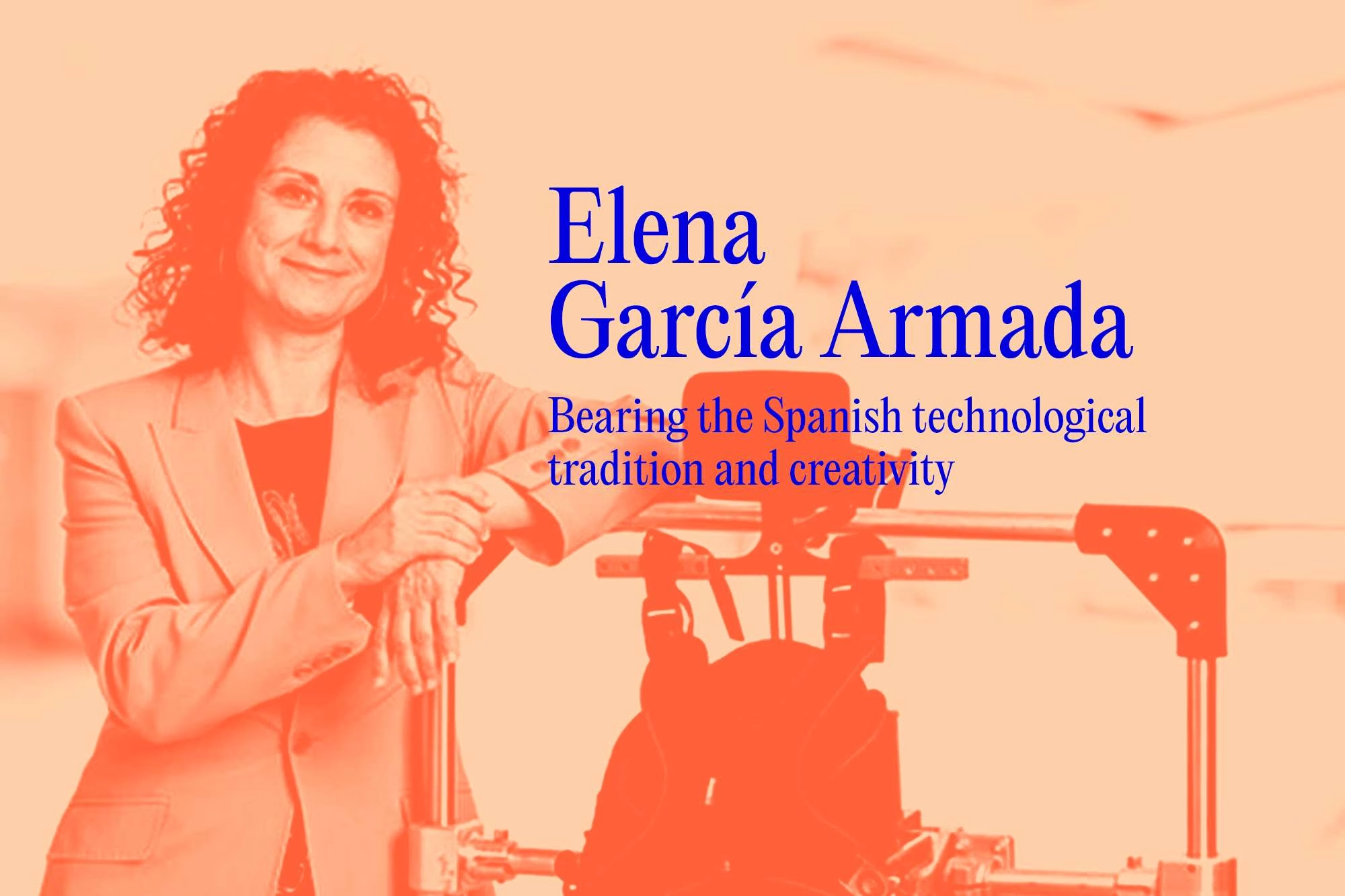
That children with movement limitations can stand up for the first time, that they can play and mobilize spatially… that they can feel like children and explore their new freedom. This is what Elena García Armada, the Spanish engineer and scientist, with a doctorate in robotics, who designed with her team the first bionic exoskeleton for children with cerebral palsy and spinal muscular atrophy, has achieved.
Elena, from a very young age, found in robotics the possibility to merge creativity with science. She began her career focused on the design of robots for the industrial sector. But years later his career would take a complete turn. In 2009 she met Daniela, a 9-year-old girl who, following a car accident, was unable to move her legs and arms.
From that moment on, Elena poured all her ingenuity, determination and knowledge into developing an innovative technology that would allow her to bring to the world a pediatric exoskeleton. A robot that gives children the possibility to improve their motor system and contributes to their rehabilitation. In addition, and very importantly, it gives the little ones back the sparkle in their eyes and motivates them to socialize and carry out activities autonomously.
- The ATLAS exoskeleton is a masterpiece of modern engineering. It is a robot made of aluminum and titanium, with the appearance of mechanical pants covering the torso.
- It has intelligent motors at the joints, which mimic the functioning of the muscles and drive the mobilization of the lower limbs.
- When the child adjusts the mechanical pants, it integrates with the robotic system. If the user wishes to walk or sit down, the exoskeleton can interpret his or her indication and proceeds to propel him or her.
- If the little one has never walked, the exoskeleton reproduces a functional walking pattern.
“Technology and innovation are always aimed at improving people’s quality of life” / Elena García Armada.
Today, García Armada’s exceptional ability to invent and contribute to humanity is recognized and awarded nationally and internationally. She is a Spanish engineer who has marked a before and after in science and has managed to rekindle hope in millions of families. She is an example that technology and innovation transform lives and can change people’s destiny.
In #TECNIMUSA, as an engineering company, we maintain our vision of innovation at the service of human beings and the sustainability of the planet. We design and manufacture eco-efficient automation solutions for industrial intralogistics and the biotechnology sector.
