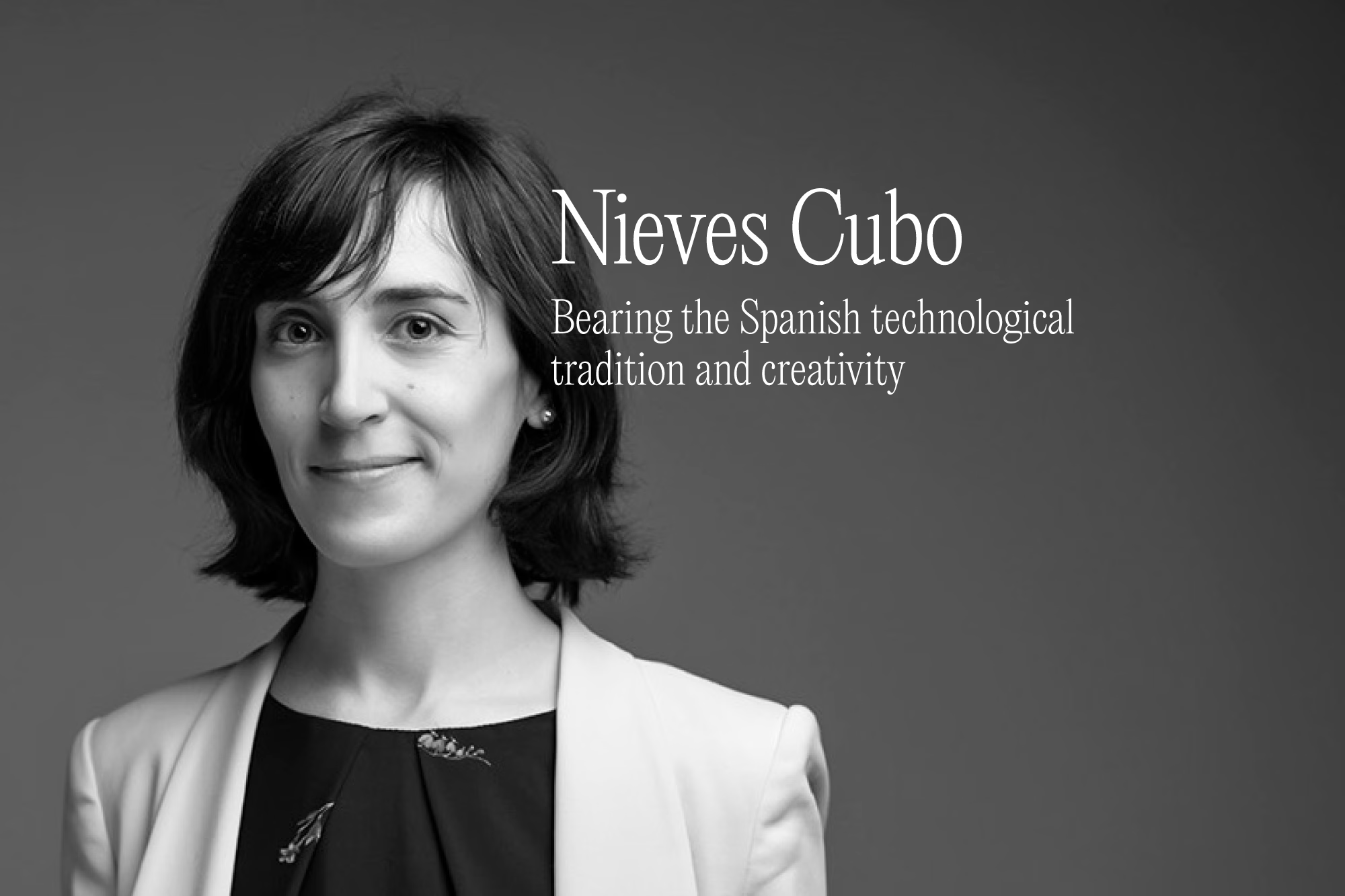
For centuries, medicine has had a dream: to create skin and tissue. Today, this is a reality thanks to low-cost technology and printers for generating implantable human tissue, developed by Madrid-based engineer Nieves Cubo Mateo. This innovation brings bioprinting to hospitals around the world.
Nieves was the first person to 3D print functional human skin from human cells and materials. She studied Electronic and Automatic Engineering at the Carlos III University of Madrid, has a Master’s degree in Materials Science and Engineering, and a PhD from the Faculty of Pharmacy at the UCM, whose thesis she developed at the Spanish National Research Council (CSIC). Her vocation is to combine technology, automation, and biology to print life.
In bioengineering, there was a need to automate the manufacture of skin to treat clinical cases of extensive burns. Multiple teams around the world tried unsuccessfully.
Nieves found the key and overcame the challenges of bioprinting. She developed a technology capable of working in physiological conditions that are safe for cells, without aggressive temperatures. This also included the creation of a specialized 3D printer.
What does the 3D printing method for human skin consist of? Two layers are created and a gel containing human cells that will connect with the patient’s cells is deposited between them. The tissue created self-assembles to regenerate the skin.
✔️ Two layers: the dermis (inner) and the epidermis (upper)
✔️ The patient’s plasma is deposited in the inner layer.
This gives the cells of burn patients a new functionality. Previously, large areas of skin had to be removed, but now only 1 cm2 of the patient’s skin is required to produce meters and meters of skin in just a few weeks.
It is still in the verification phase for its application. It is also being optimized using AI and new biomaterials. And on the horizon, we can already glimpse the bioprinting of bone and cartilage.
It is an innovation that helps repair what nature alone cannot, saves lives… and was born in a Spanish laboratory.
At TECNIMUSA, we continue to support innovation. It is part of our DNA.
