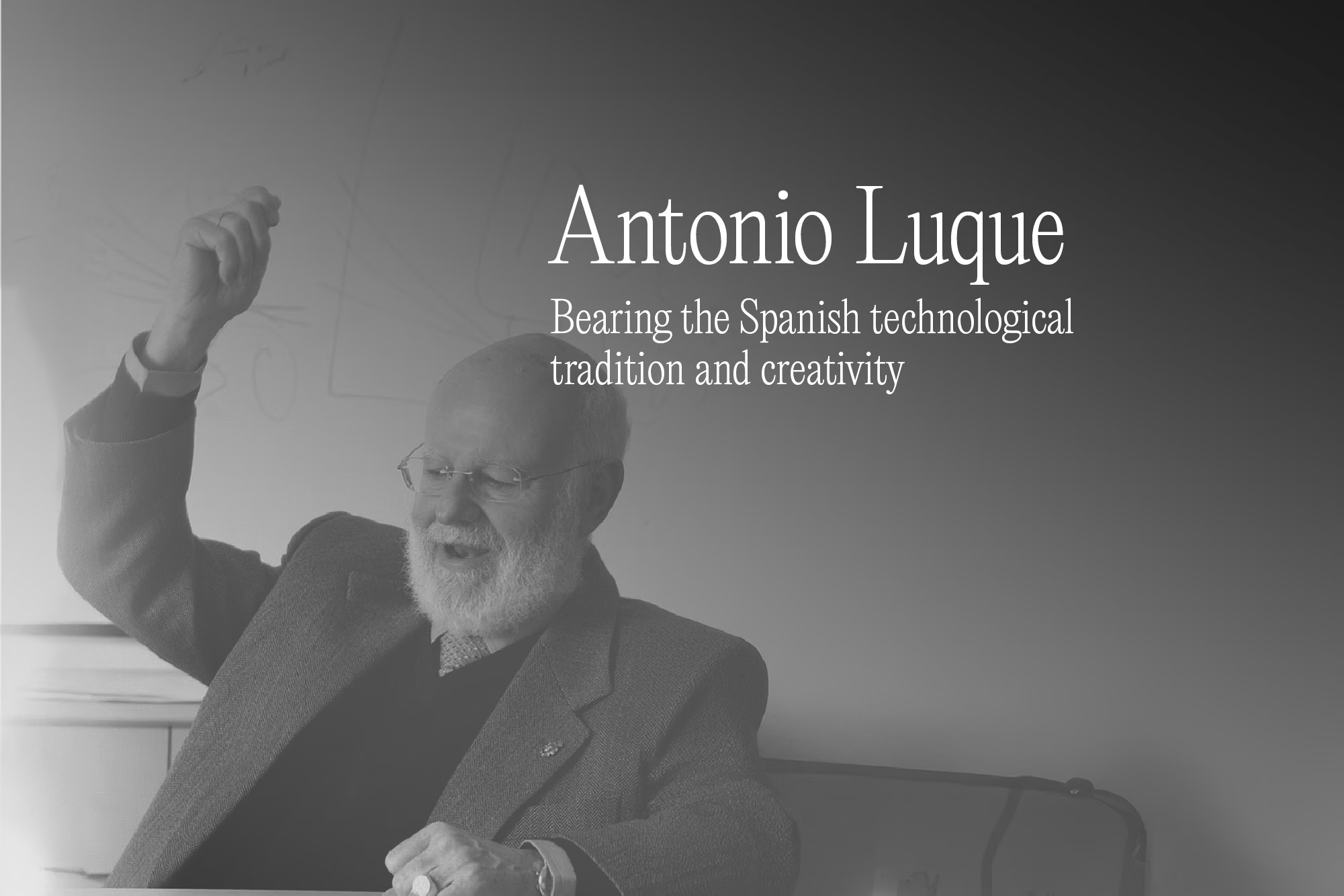
“Spain, cradle of the modern bifacial cell”.
Bifacial solar cells are those that can capture sunlight from both sides. The traditional ones only do so on their front side. How did they come about? The theoretical idea arose in Japan, while the first applications were observed in Soviet satellites. However, it was in Spain 🇪🇸 where it was possible to develop bifacial solar cells that could be manufactured and marketed… for use in everyday life.
While tiny, one-cubic-millimeter bifacial cells were being manufactured in Russia and connected in series to form panels, the Universidad Politécnica de Madrid UPM was developing a huge research program to create industrially viable bifacial solar cells. As a result, under the direction of engineer Antonio Luque López, it presented the precursor of modern bifacial cells in the 1970s:
- A BSC with a silicon wafer cell. They were large devices like today’s cells, with metal grids at the front and back. Up to that time, grids were only used in single-phase cells.
Research continued, and the university laboratory became the IES-UPM Solar Energy Institute. Thus, together with Professor Luque, they produced bifacial cells with increasingly higher yields.
IES also studied how to get the most out of bifacial cells. In addition, the 🚀 intermediate bandgap solar cell was invented, a high-performance device that is still attracting the attention of multiple international researchers.
This is evidence that Spain has been instrumental in transforming a scientific idea into a real, practical and fully commercial technology… and in creating and proposing new ideas that continue to light up the world. 🌍
